The global transition toward clean energy and advanced mobility has transformed from a purely environmental endeavor into a critical theater of geopolitical competition. In a major move to fortify domestic energy supply chains, the United States Department of Defense has finalized a monumental $1.4 billion loan agreement with Sila Nanotechnologies. This massive capital injection is designed to accelerate the domestic production of advanced silicon-carbon battery materials, a technology seen as crucial for both next-generation commercial electric vehicles and sensitive military applications. The deal underscores a growing urgency within Washington to establish a self-reliant supply chain for critical battery components, shielding the nation from geopolitical disruptions and reducing reliance on foreign adversaries.
The Evolution of Battery Chemistry: Why Graphite is No Longer Enough
For decades, the lithium-ion batteries powering everything from smartphones to electric sedans have relied on a relatively unchanged architecture. While cathode chemistries have undergone numerous iterations, the anode—the negative electrode of the battery—has remained almost exclusively dependent on graphite. Graphite has long been favored for its stability and reliability over thousands of charge cycles. However, the material is reaching its theoretical physical limits, leaving battery manufacturers with diminishing returns in their quest to pack more energy into smaller, lighter cells.
This technological bottleneck has led researchers to look toward silicon. Silicon possesses a theoretical energy storage capacity significantly greater than that of graphite. When integrated into battery anodes, silicon-carbon composites can increase overall battery energy density by 20% to 40%.
In practical terms, this leap in performance could revolutionize several sectors. For commercial electric vehicles, higher energy density means significantly longer driving ranges on a single charge, or alternatively, lighter and smaller battery packs that reduce overall vehicle weight and lower manufacturing costs. In the defense sector, the benefits are equally profound. Lighter, more energy-dense batteries allow military reconnaissance drones to stay airborne for extended durations, reduce the weight of portable power packs carried by infantry soldiers, and provide quiet, high-capacity energy reserves for tactical ground vehicles operating in hostile environments.
The Geopolitical Tug-of-War Over Critical Minerals
The technical advantages of silicon are matched by an equally compelling geopolitical imperative. Currently, the global supply chain for traditional battery materials is heavily centralized in East Asia, with Chinese companies dominating both the mining and refining of graphite. According to market analysts, Chinese facilities process the vast majority of the world's synthetic and natural graphite, giving Beijing significant leverage over the global transition to electric vehicles.
This concentration of market power poses a severe vulnerability for Western nations. Recent export restrictions imposed by Beijing on critical minerals, including graphite, gallium, and germanium, have heightened fears of potential supply cutoffs. For defense planners, relying on a geopolitical rival for materials essential to military communications, unmanned aerial vehicles, and advanced weapon systems is increasingly viewed as an unacceptable national security risk.
By investing in domestic silicon-carbon manufacturing, the U.S. government is attempting to bypass the graphite bottleneck entirely. Because silicon is abundant and can be processed domestically, building a robust silicon anode industry allows the United States to establish a parallel, secure supply chain that is insulated from foreign tariffs, export controls, and geopolitical conflicts.
Scaling Up: Sila’s Moses Lake Expansion and Commercial Viability
Founded in 2011 by materials scientists and engineers, Sila Nanotechnologies has spent more than a decade refining its proprietary silicon-carbon anode material, known commercially as Titan Silicon. The company’s primary production hub is located in Moses Lake, Washington, a region that has rapidly become an industrial cluster for advanced battery materials due to its access to abundant, low-cost hydroelectric power.
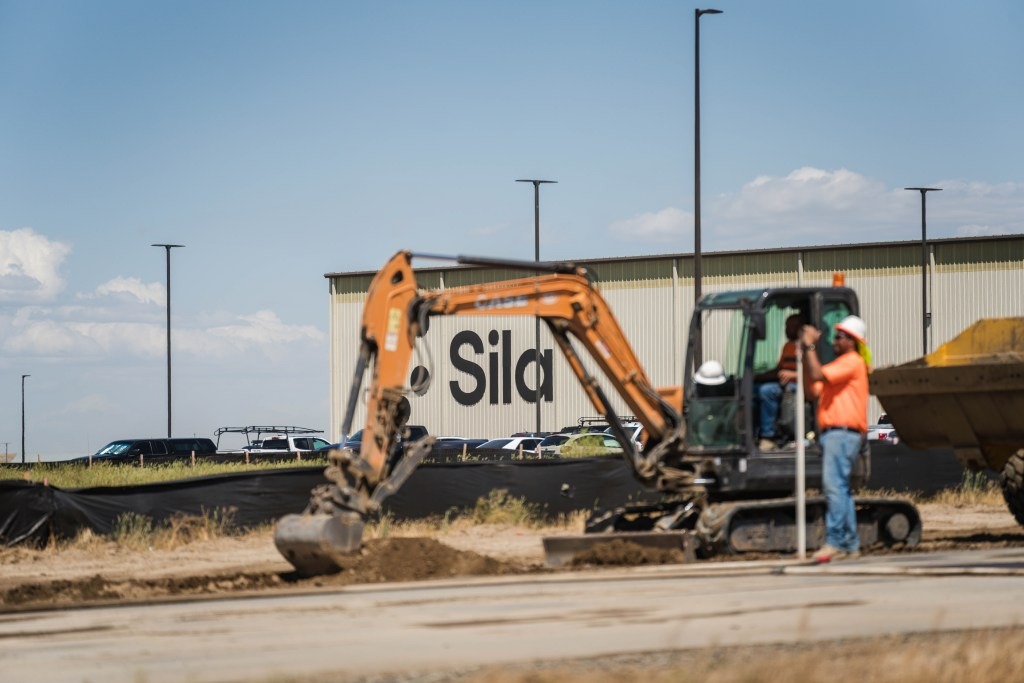
Sila's Moses Lake facility officially commenced operations in September, representing a critical milestone in moving the technology from pilot-scale laboratories to commercial-scale manufacturing. At its initial operating capacity, the plant can produce approximately 2 gigawatt-hours (GWh) of anode material annually. However, the newly secured $1.4 billion Department of Defense loan will fund a massive fivefold expansion of the facility. Once fully built out, the expanded plant is projected to produce enough silicon-carbon material to supply more than 100,000 electric vehicles per year.
This federal backing complements substantial private investment. Just months prior to the loan announcement, Sila closed a $300 million funding round led by Atreides Management and Sutter Hill Ventures. To date, the startup has secured more than $1.5 billion in private venture capital and strategic investments, establishing it as one of the most well-funded climate-tech startups in the United States.
The market validation for Sila’s technology is already visible in its commercial partnerships. The company has secured supply agreements with luxury automaker Mercedes-Benz—which plans to incorporate Sila's materials into its upcoming electric G-Class SUVs—as well as Japanese electronics giant Panasonic, a major supplier to the broader electric vehicle market. The involvement of the Pentagon is expected to open up a lucrative parallel revenue stream, positioning Sila to bid on high-value defense contracts as military operations worldwide demand increasingly sophisticated portable power solutions.
A Comprehensive Defense Strategy for Critical Resources
The loan to Sila is not an isolated transaction but rather part of a coordinated, multi-front initiative by the Department of Defense to secure the nation's industrial base. Alongside the Sila announcement, the Pentagon unveiled major financial commitments to three other critical material companies, reflecting a comprehensive strategy to secure every tier of the advanced manufacturing supply chain.
- Sunrise Energy Metals: The Australian company was awarded a $400 million loan to support the extraction and processing of scandium. Scandium is a rare metal that, when alloyed with aluminum, creates exceptionally strong, lightweight, and heat-resistant materials widely used in aerospace components and advanced military hardware.
- Niron Magnetics: Based in Minnesota, Niron Magnetics received a $150 million loan to scale up the production of its proprietary iron-nitride permanent magnets. These magnets do not rely on rare earth elements—another sector currently dominated by China—and are vital components in electric motors, consumer electronics, and missile guidance systems.
- Strategic Bauxite: The government made an $85 million equity investment in Strategic Bauxite. This investment is aimed at securing domestic access to bauxite, the primary ore used to produce aluminum, which is essential for armored vehicles, naval vessels, and military aircraft.
Together, these investments represent a significant pivot in U.S. defense policy, transitioning from a reactive procurement model to a proactive, state-supported industrial strategy aimed at reclaiming leadership in critical materials.
Navigating the "Valley of Death" in Advanced Materials
While the influx of federal capital represents a major victory for Sila and the broader domestic battery industry, the path to full-scale commercialization is fraught with challenges. Transitioning from pilot-scale production to high-volume manufacturing is notoriously difficult in the advanced materials sector—a phase often referred to as the "valley of death" for hardware startups. Maintaining strict quality control, achieving cost parity with cheap foreign graphite, and managing complex chemical supply chains at scale will test Sila’s operational execution.
Furthermore, the global market remains highly dynamic. While silicon anodes offer superior performance, Chinese manufacturers are also investing heavily in silicon-based technologies and expanding their synthetic graphite production to drive down global prices. This price pressure could make it difficult for domestic manufacturers to compete on cost alone without ongoing regulatory support, such as the tax credits provided by the Inflation Reduction Act.
Nonetheless, the strategic imperative is clear. By leveraging the financial power of the Department of Defense, the U.S. government is signaling that national security and economic resilience are inextricably linked to energy independence. As Sila expands its operations in Moses Lake, the project will serve as a vital test case for whether public-private partnerships can successfully rebuild America's industrial core for the twenty-first century.